 Tile Export
Nepal Rising Choice for Premium Indian Tiles | Imperial Decor
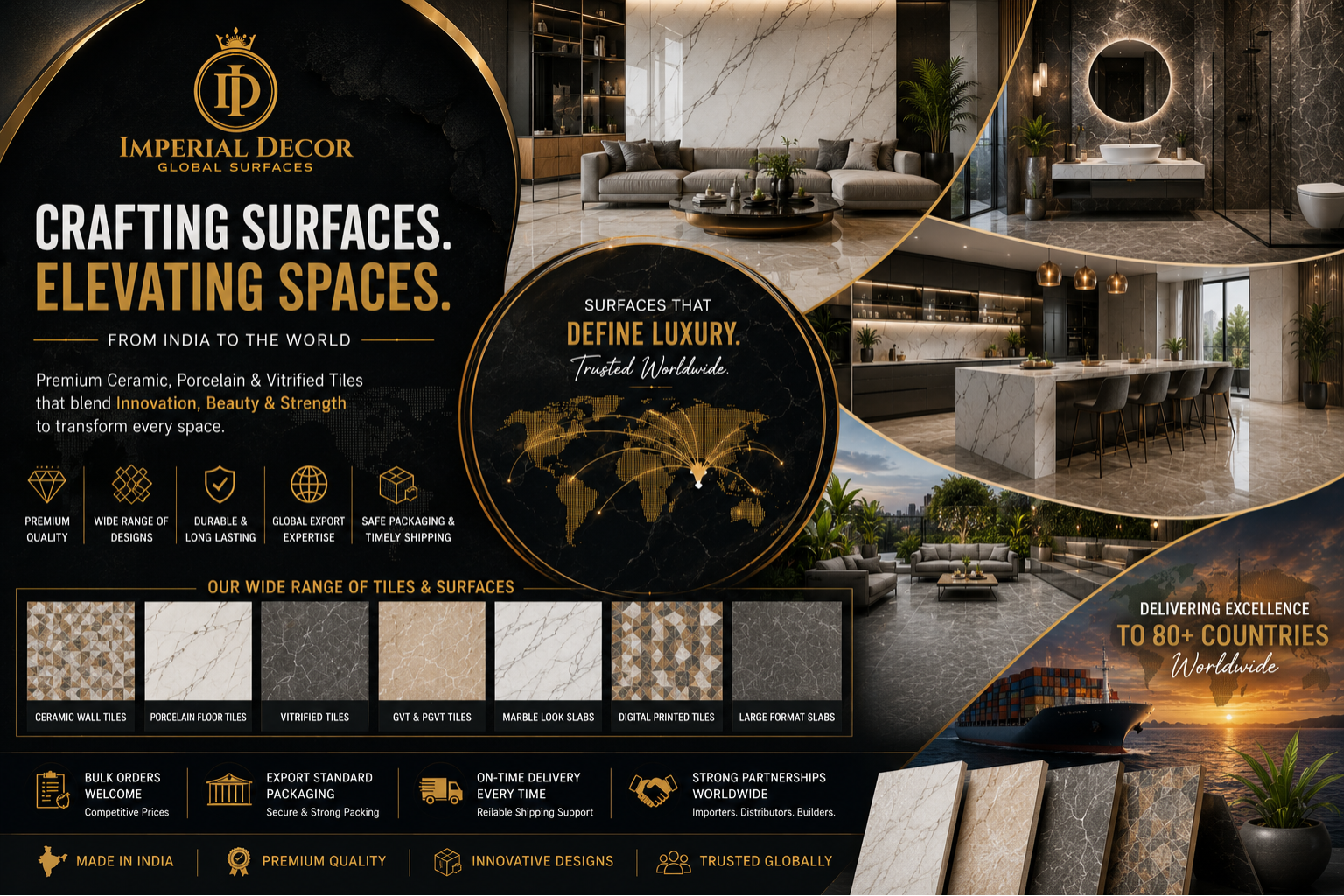
As modern construction and interior design trends continue to grow in Nepal, the demand for high-quality ceramic tiles, porcelain tiles, and vitrified tiles from India is increasing rapidly. Imperial Decor Global Surface is proudly supplying stylish and durable surface solutions to the Nepal market with reliable export support and premium-quality products.
From elegant wall tiles and modern floor tiles to luxury marble-look porcelain slabs, the company offers collections designed for homes, hotels, offices, and commercial spaces. Known for export-quality standards, modern designs, and competitive pricing, Imperial Decor Global Surface is becoming a trusted name among importers and distributors looking for reliable tile suppliers for Nepal.
 Tile Export
Saudi Arabia Growing Demand for Indian Tiles
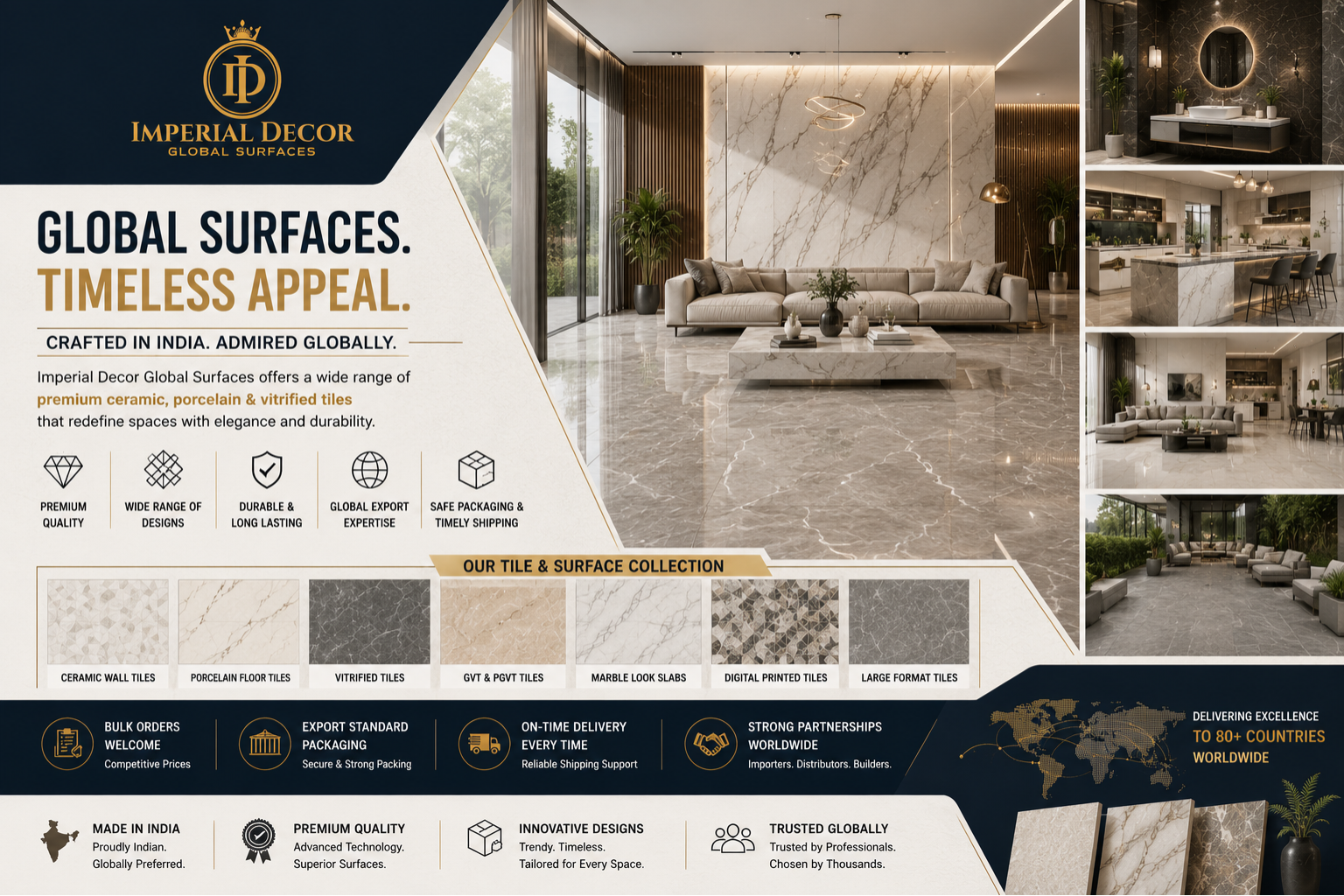
From luxury villas to modern commercial projects, the demand for Indian ceramic tiles in Saudi Arabia is increasing rapidly. Imperial Decor Global Surface is proudly serving the market as a trusted tiles exporter from India to Saudi Arabia, offering stylish porcelain tiles, vitrified tiles, wall tiles, and floor tiles with international quality standards.
Known for modern designs, durable finishes, and competitive pricing, the company delivers premium digital printed tiles and luxury surface solutions for residential and commercial spaces across Saudi Arabia.
With strong expertise in the global tiles export market, Imperial Decor Global Surface continues to build reliable partnerships with importers, distributors, and construction companies worldwide.
 Tile Export
Discover Premium Indian Tiles for Mexico with Imperial Decor Global Surface
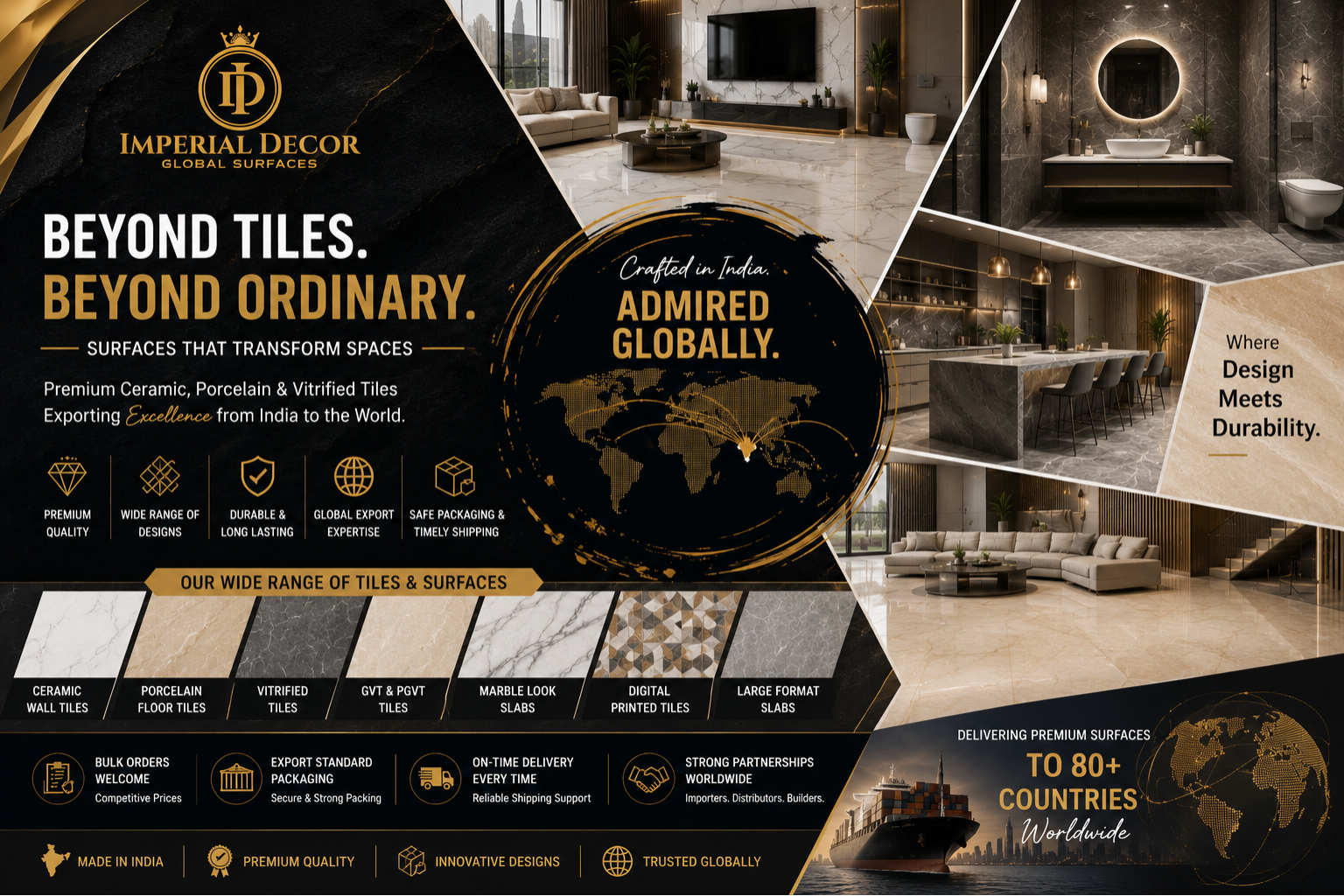
Mexico’s construction and interior design industry is rapidly embracing modern surfaces, stylish interiors, and durable flooring solutions. To meet this growing demand, Imperial Decor Global Surface is delivering high-quality ceramic tiles from India to Mexico with world-class designs and reliable export services.
As an experienced tiles exporter from India, the company offers an exclusive collection of:
- Porcelain tiles
- Vitrified tiles
- Digital wall tiles
- Floor tiles
- Marble-look tiles
- Wooden finish tiles
- Large format slabs
The rising popularity of Indian ceramic tiles in Mexico comes from their perfect balance of affordability, durability, and luxury appearance. Imperial Decor Global Surface combines advanced manufacturing technology with international design trends to supply products suitable for homes, hotels, commercial projects, and modern architectural spaces.
What makes the company trusted in the global tiles export market is its commitment to:
- Premium export quality
- Safe international packaging
- Competitive pricing
- Modern tile collections
- Timely container shipment
With growing expertise in ceramic tiles export, porcelain slab export, and wall & floor tiles supply, Imperial Decor Global Surface continues to build strong business relationships with importers and distributors across Mexico
.png) Tile Export
Tile Export
Why Philippines Importers Prefer Indian Tiles from Imperial Decor Global Surface
The demand for Indian ceramic tiles in Philippines is growing rapidly due to modern construction trends, luxury interiors, and affordable premium surfaces. Among the leading names in the tiles export market, Imperial Decor Global Surface is recognized as a trusted tiles exporter from India to Philippines offering stylish and durable surface solutions.
From elegant porcelain tiles and vitrified tiles to trendy marble finish tiles, wooden texture tiles, and digital wall tiles, the company provides a wide range of products designed for homes, hotels, offices, and commercial spaces.
What makes Imperial Decor Global Surface stand out in the global ceramic tiles export industry is its focus on:
- International quality standards
- Modern tile designs
- Competitive export pricing
- Strong packaging for safe delivery
- Timely global shipment
As a growing Indian tile exporter, the company supports importers, distributors, and construction companies in the Philippines with reliable export services and premium-quality products.
With the increasing popularity of wall and floor tiles from India, Imperial Decor Global Surface is becoming a preferred choice for businesses looking for trusted ceramic tile suppliers for Philippines.
 Tile Export
Imperial Decor Global Surface - Trusted Tiles Exporter to Vietnam
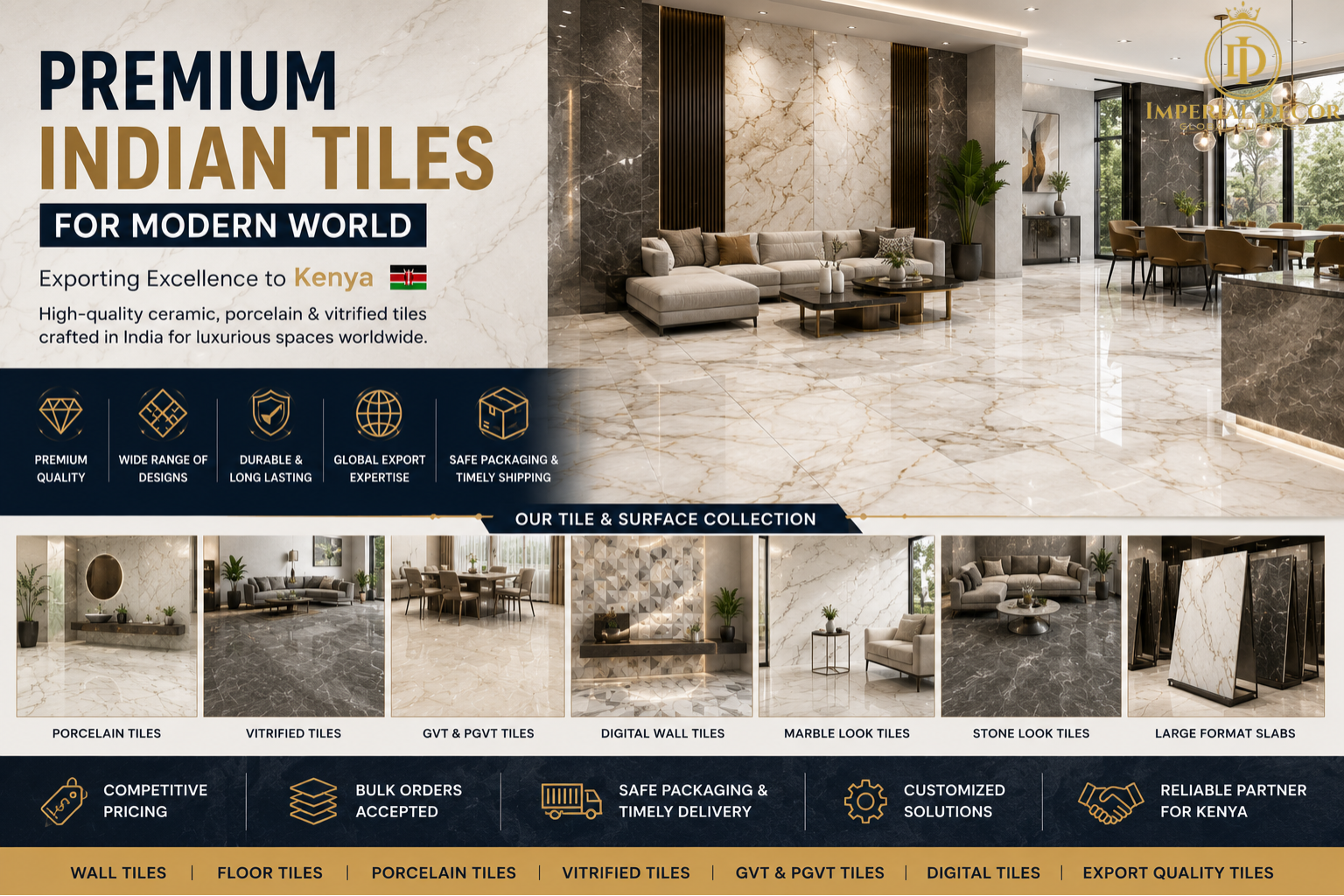
Vietnam is becoming one of the fastest-growing markets for the ceramic tiles export industry, and Imperial Decor Global Surface is proud to be a trusted tiles exporter from India to Vietnam. The company specializes in ceramic tiles export, vitrified tiles export, porcelain tiles export, wall tiles, floor tiles, and large format porcelain slabs for residential and commercial projects.
As a reliable Indian tiles exporter, Imperial Decor Global Surface supplies premium-quality digital printed tiles, marble look tiles, wooden finish tiles, and luxury surface solutions with modern international designs and competitive pricing. The company focuses on export-quality packaging, timely shipment, and global quality standards to meet the growing demand for Indian ceramic tiles in Vietnam.
With strong expertise in the global tiles export market, Imperial Decor Global Surface helps importers, distributors, architects, and construction companies source high-quality wall and floor tiles from India with reliable service and long-term business support.
For businesses looking for trusted tile suppliers for Vietnam, Imperial Decor Global Surface is becoming a preferred partner in the international ceramic and porcelain tiles industry.
Tile Export
Did You Know Imperial Decor Global Surface is a Trusted Tiles Exporter from India?
Did you know that Imperial Decor Global Surface is becoming one of the trusted names in the tiles export market from India? As a reliable tiles exporter from India, the company specializes in ceramic tiles export, vitrified tiles export, porcelain tiles export, wall tiles, floor tiles, and large format tiles for international markets.
With growing global demand for Indian ceramic tiles and porcelain slabs, Imperial Decor Global Surface supplies premium-quality products with modern designs, durable finishes, and competitive pricing. The company focuses on high-quality manufacturing, export-standard packaging, and timely delivery for buyers across the UAE, USA, UK, Africa, and European countries.
From digital printed tiles and marble look tiles to wood finish tiles and luxury surface solutions, Imperial Decor Global Surface offers a wide range of products suitable for residential, commercial, and hospitality projects.
As a professional ceramic tile exporter from India, the company is committed to quality, customer satisfaction, and long-term global business relationships, making it a trusted partner in the international tiles industry.
 Tile Export
India-UAE CEPA: Tile Import Duty Benefits for UAE Buyers (2026 Guide)
The India-UAE Comprehensive Economic Partnership Agreement (CEPA), in force since May 2022, has reshaped how UAE importers source ceramic, porcelain and vitrified tiles from India. For buyers in Dubai, Abu Dhabi and Sharjah, CEPA can meaningfully lower the landed cost of Indian tiles - provided shipments are documented correctly. This guide explains what changed, how to claim the benefit, and what to ask your exporter.
What is the India-UAE CEPA?
CEPA is a bilateral free-trade agreement between India and the United Arab Emirates designed to reduce or eliminate tariffs on a large share of goods traded between the two countries. Ceramic and porcelain tiles - classified under HS code 6907 - are among the product lines that benefit from preferential tariff treatment under the agreement, with duties phased down over the implementation schedule.
Import duty before and after CEPA
Historically, tiles entering the UAE attracted the standard GCC Common External Tariff of 5%. Under CEPA, Indian-origin tiles qualify for preferential (reduced or eliminated) duty when accompanied by a valid Certificate of Origin. The exact rate depends on the specific tariff line and the year within the phase-out schedule, so importers should confirm the current applicable rate with UAE customs or their clearing agent for their HS sub-heading.
The key requirement: a valid Certificate of Origin
To claim CEPA benefits, every shipment must carry a Certificate of Origin (CoO) proving the tiles were manufactured in India. The CoO is issued by authorised agencies in India against the commercial invoice, packing list and manufacturer details. Without a correctly issued CoO, UAE customs will apply the standard duty - so this single document is what unlocks the saving.
What this means for UAE buyers
- Lower landed cost - preferential duty reduces the total cost of imported Indian tiles versus non-CEPA origins.
- Competitive edge - distributors and contractors can price more aggressively while protecting margin.
- Faster, predictable clearance - complete, compliant paperwork reduces hold-ups at Jebel Ali and other UAE ports.
How Imperial Decor supports CEPA-compliant shipments
As a Pune-based merchant-exporter, Imperial Decor handles the documentation that makes CEPA work for you. For every order we provide the correct HS classification (6907), arrange the Certificate of Origin, and ship export-grade ceramic, porcelain and vitrified tiles FOB/CIF from Nhava Sheva and Mundra to Jebel Ali, typically in 10-14 days. Our team coordinates the commercial invoice, packing list and shipping documents so your goods clear smoothly under CEPA.
Documents checklist for CEPA tile imports
- Commercial Invoice
- Packing List
- Certificate of Origin (for CEPA preferential duty)
- Bill of Lading
- HS code 6907 classification on all documents
Planning to import tiles from India into the UAE? Contact Imperial Decor for a CEPA-ready quotation with FOB and CIF pricing, MOQ and lead times.
Note: Tariff lines and phase-out schedules under CEPA are updated periodically. Always confirm the current applicable duty for your specific HS sub-heading with UAE customs or a licensed clearing agent before finalising costings.
 Tile Export
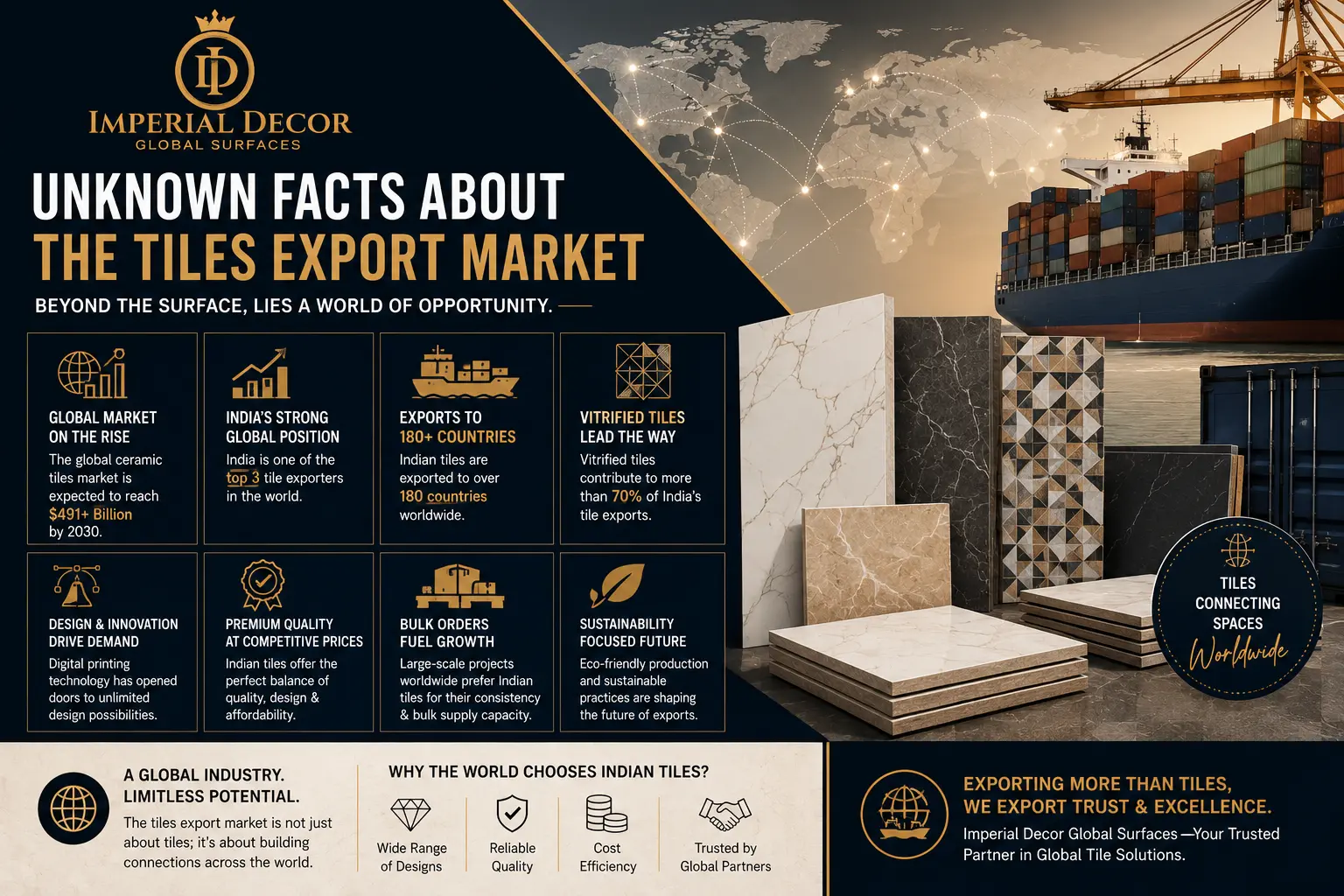
Unknown Facts About the Tiles Export Market
The global tiles export market is growing rapidly, and India has become one of the leading hubs for ceramic tiles export, vitrified tiles export, porcelain tiles export, and floor tiles manufacturers worldwide. Many international buyers search for best tile exporters in India, ceramic tile suppliers, and porcelain tile manufacturers, but few know the hidden facts behind the industry.
One important fact is that export quality tiles packaging is as important as tile quality because improper packaging can damage products during international shipping. Freight charges and container costs also affect the final pricing in the global tile export business.
Many buyers think porcelain tiles and vitrified tiles are the same, but they differ in durability, water absorption, and usage. Today, digital printed tiles, marble look tiles, wooden finish tiles, and large format porcelain tiles are highly demanded in international markets.
Countries like the UAE, USA, UK, Africa, and Europe are importing large quantities of Indian ceramic tiles because of competitive pricing, premium quality, modern designs, and reliable export services.
India is now becoming one of the top destinations for tiles exporters, ceramic tile manufacturers, porcelain slab exporters, and wall & floor tiles suppliers in the global construction and interior design industry.
 Tile Export
How to Import Tiles from India — A Complete Guide for Distributors and Importers
Planning to import tiles from India? This complete guide covers the entire process — from product selection and sampling to export documentation, incoterms, payment terms and finding a reliable Indian tiles exporter.
Top Tile Design Trends for Modern Homes and Commercial Spaces
Tiles have evolved from being a basic construction material to becoming a key element in modern interior design. Today, tiles are available in a wide range of textures, finishes, sizes, and patterns that allow architects and designers to create elegant and functional spaces. With advancements in manufacturing technology, modern tiles combine durability, design flexibility, and long-term performance.
Understanding the latest tile trends can help homeowners and project developers choose materials that enhance both the visual appeal and practicality of their spaces.
Large Format Tiles
Large format tiles are becoming increasingly popular in modern interiors. Sizes such as 600×1200 mm, 800×800 mm, and larger slabs create a seamless and spacious look by reducing the number of grout lines.
These tiles are commonly used in living rooms, commercial lobbies, and luxury residential projects because they give interiors a clean and sophisticated appearance.
Marble-Look Tiles
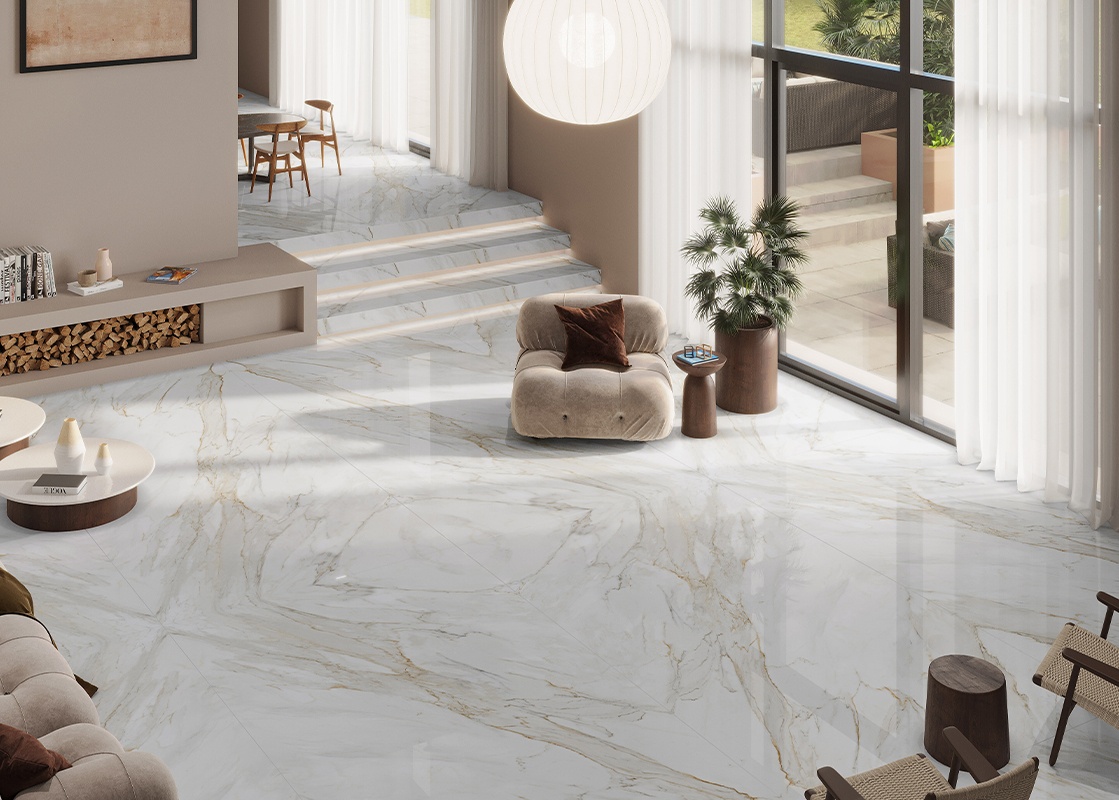
Natural marble has always been associated with luxury. Today, advanced digital printing technology allows tiles to replicate the beauty of marble while offering better durability and easier maintenance.
Marble-look tiles are widely used in living rooms, hotel interiors, showrooms, and premium residential spaces.
Matte and Satin Finishes
While glossy tiles remain popular, matte and satin finishes are becoming a preferred choice for modern interiors. These finishes provide a subtle and elegant appearance while reducing surface reflections.
Matte tiles are particularly suitable for flooring in homes, offices, and commercial areas where both aesthetics and safety are important.
Stone and Natural Texture Designs
Tiles inspired by natural stone textures are another major design trend. These designs offer a natural and sophisticated look while maintaining the strength and practicality of vitrified or porcelain tiles.
They are commonly used in feature walls, commercial interiors, and contemporary residential designs.
Neutral Color Palettes
Modern tile collections increasingly focus on neutral shades such as beige, grey, ivory, and light stone tones. These colors help create calm and elegant interiors while easily complementing different furniture styles and décor elements.
Neutral tones are ideal for both residential homes and commercial environments.
Conclusion
Tiles are no longer just functional materials; they are now an essential design element in modern architecture. With options such as large format tiles, marble-look designs, matte finishes, and natural textures, designers have endless possibilities to create unique and stylish spaces.
Choosing high-quality tiles manufactured for export ensures consistent quality, reliable packaging, and dependable bulk supply, making them suitable for both domestic and international projects.
 Tile Buying Guide
Ceramic vs Vitrified vs Porcelain Tiles: Which One Is Right for Your Project?
Tiles play an essential role in defining the style, durability, and functionality of modern spaces. With multiple options available in the market, choosing between ceramic, vitrified, and porcelain tiles can sometimes be confusing. Each type of tile has its own advantages and applications, making it suitable for different environments and design requirements.
Understanding the key differences between these tile types can help homeowners, architects, and project developers select the most appropriate solution for their spaces.
Ceramic Tiles
Ceramic tiles are one of the most widely used options for interior wall applications. Manufactured from natural clay materials and fired at high temperatures, ceramic tiles provide a smooth surface and consistent finish.
Key Benefits
• Lightweight and easy to install
• Wide variety of designs and patterns
• Suitable for wall applications
• Cost-effective solution for residential spaces
Best Applications
Ceramic tiles are commonly used for bathroom walls, kitchen walls, backsplashes, and decorative interior walls.
Vitrified Tiles
Vitrified tiles are manufactured through a process that combines clay with silica and quartz, creating a dense and durable tile body. These tiles are known for their strength and resistance to moisture.
Key Benefits
• Strong and durable surface
• Low water absorption
• Suitable for flooring applications
• Ideal for residential and commercial spaces
Best Applications
Vitrified tiles are widely used for living room floors, office spaces, retail outlets, and corridors where durability is important.
Porcelain Tiles
Porcelain tiles are a premium category of vitrified tiles produced with refined raw materials and higher firing temperatures. They offer superior density, durability, and extremely low water absorption.
Key Benefits
• Very high strength and durability
• Low water absorption (<0.5%)
• Resistant to stains and scratches
• Suitable for indoor and outdoor applications
Best Applications
Porcelain tiles are commonly used in luxury homes, hotels, shopping malls, airports, and commercial environments where both performance and design are important.
Choosing the Right Tile
When selecting tiles for your project, consider the following factors:
Location of installation – Wall or floor applications require different tile properties.
Durability requirements – High-traffic areas require stronger tiles like vitrified or porcelain.
Design preference – Tiles are available in marble, stone, wood, and contemporary patterns.
Budget and project scale – Large projects often require tiles that balance durability and cost.
Final Thoughts
Ceramic, vitrified, and porcelain tiles each offer unique advantages depending on the space and usage requirements. By understanding their differences, you can select tiles that provide the right combination of design appeal, durability, and long-term performance.
High-quality tiles manufactured for export ensure consistent production quality, reliable packaging, and dependable supply for global markets.
 Tile Buying Guide
Choosing the Right Tiles for Modern Interiors: A Complete Guide
Tiles have become one of the most important design elements in modern architecture and interior design. From residential homes to commercial spaces, tiles provide a perfect balance of durability, aesthetics, and practicality. With a wide variety of options such as ceramic, vitrified, porcelain, and digital tiles available today, selecting the right tile can significantly enhance the overall appearance and functionality of any space.
In this blog, we will explore the key factors to consider when choosing tiles and how different types of tiles can transform interiors.
Why Tiles Are a Popular Choice for Modern Spaces
Tiles are widely preferred for flooring and wall applications because they offer several advantages compared to other materials.
Durability – Tiles are strong and long-lasting, making them ideal for areas with regular foot traffic.
Easy Maintenance – Most tiles are easy to clean and require minimal upkeep.
Moisture Resistance – Many tiles, especially porcelain and vitrified tiles, have low water absorption, making them suitable for bathrooms and kitchens.
Design Variety – Modern tile manufacturing allows endless design possibilities, including marble, stone, wood, and abstract patterns.
Because of these benefits, tiles are commonly used in homes, offices, hotels, malls, and commercial buildings.
Types of Tiles Used in Modern Interiors
1. Ceramic Tiles
Ceramic tiles are widely used for wall applications due to their lightweight structure and smooth surface finish. They are ideal for bathroom walls, kitchen backsplashes, and decorative wall areas.
2. Vitrified Tiles
Vitrified tiles are manufactured using advanced technology that creates a dense and durable tile body. They are highly resistant to moisture and stains, making them suitable for living rooms, corridors, and commercial interiors.
3. Porcelain Tiles
Porcelain tiles are known for their high density and extremely low water absorption. They are suitable for both walls and floors and are commonly used in luxury interiors, hotels, and modern residential projects.
4. Digital Tiles
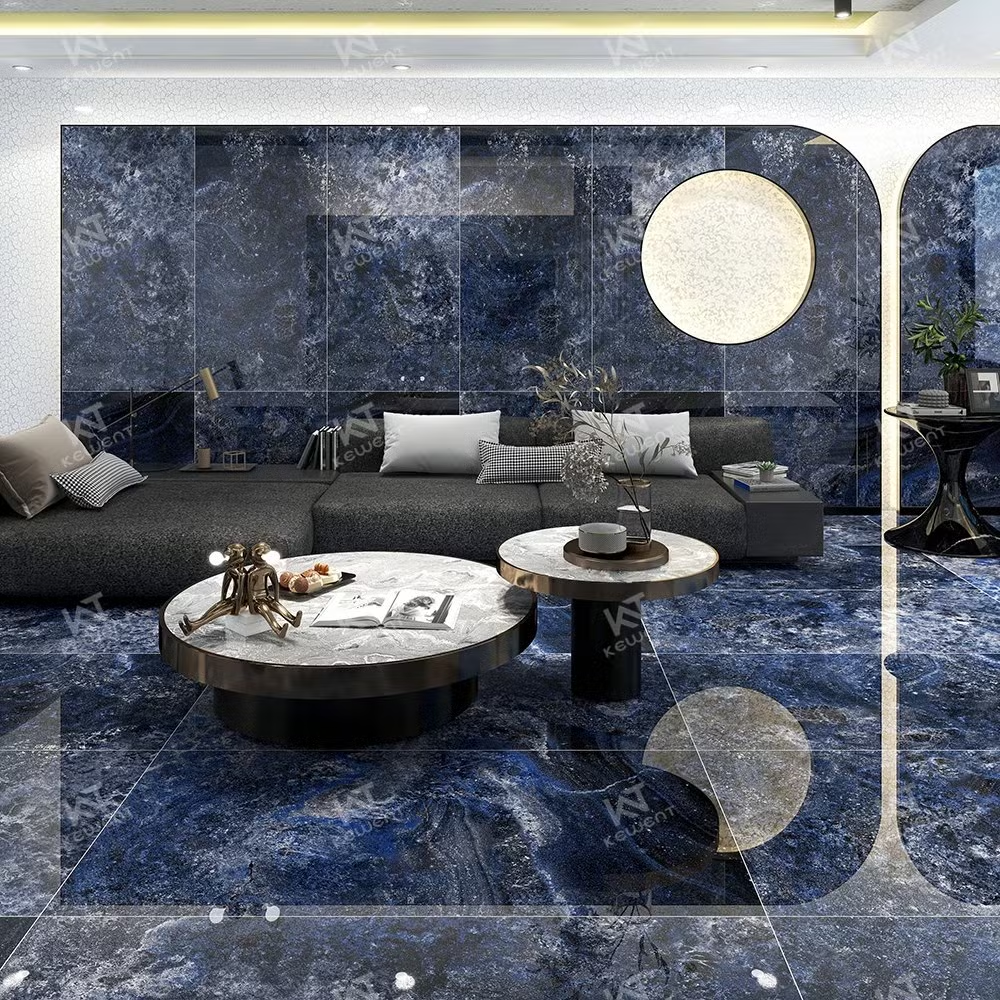
Digital printing technology allows tiles to have highly detailed patterns and textures. These tiles are perfect for feature walls, decorative areas, and contemporary interiors.
Key Factors to Consider When Selecting Tiles
When choosing tiles for your project, consider the following factors:
Tile Size
Large format tiles such as 600×1200 mm or 800×800 mm create a spacious and modern look, while smaller tiles work well for compact areas.
Finish
Tiles are available in different finishes such as glossy, matte, satin, and anti-skid. The finish should be selected based on the area of installation.
Durability
For high-traffic areas like commercial spaces or corridors, vitrified or porcelain tiles provide better durability.
Design and Color
Neutral shades and marble-look designs remain popular choices because they create a clean and timeless interior appearance.
Applications of Tiles in Interior Design
Tiles can be used in multiple areas of a property, including:
-
Living room flooring
-
Bathroom walls and floors
-
Kitchen walls and backsplashes
-
Commercial spaces and offices
-
Hotel interiors and retail areas
-
Feature walls and decorative sections
The right tile selection can completely transform the ambiance of a space.
Conclusion
Tiles continue to be a preferred material for modern interiors because they offer durability, design flexibility, and long-term value. Whether you are designing a home, office, or commercial project, selecting the right tile type, size, and finish can help create a stylish and functional environment.
High-quality tiles manufactured for export ensure consistent quality, reliable packaging, and dependable bulk supply, making them ideal for both domestic and international projects.